FOOD SCRAPS RECYCLING
Working to keep food waste out of landfills.
Adding organics recycling to your existing waste services is an easy way to reach your overall sustainability goals. Diverted food waste is transferred to facilities that process the material into other resources such as renewable energy, soil amendments and animal bedding. We can help guide Connecticut and Massachusetts businesses through evolving food waste regulations.
Why Recycle Food Scraps?
Creates Sustainable Products
Composted organic material enriches soil with nutrients, reducing the need for fertilizers.
Helps The Community
We can track your business or organization's food scraps to help reduce waste in your community.
Supports Local Economy
Compost is produced at local facilities and used by nearby farms, contractors, and residents.
How Food Scraps Get Recycled
USA has stepped up, implementing sustainable organics recycling programs for a full range of customers both large and small. We guide our customers in developing their own effective procedures for separating organics. Then, we can help you find the right size container. We service these containers frequently and bring the organics to specialized recycling facilities.
Together we're doing our part to turn waste into sustainable products like nutrient-rich compost, as we close the loop from farm to consumer and back to the earth.
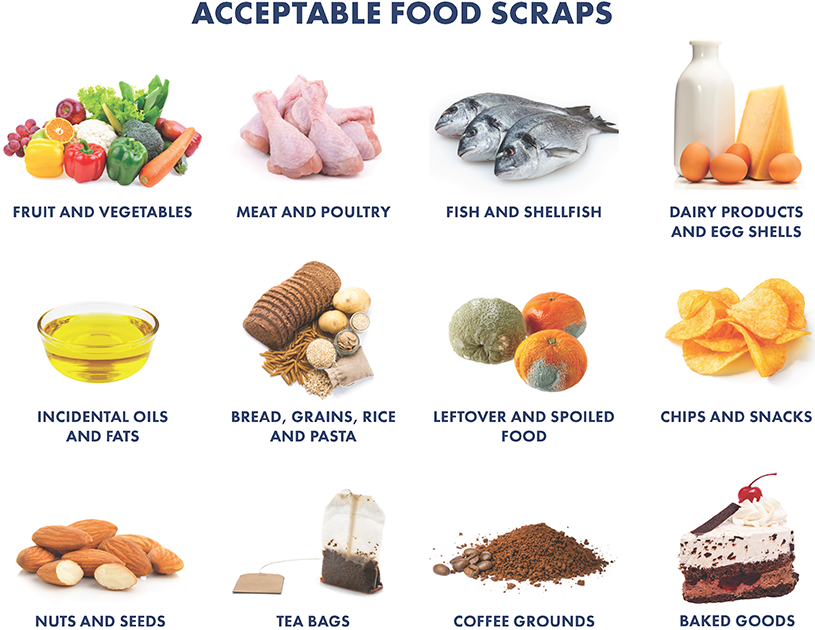
Materials Accepted
List of materials accepted in an organics recycling program:
Residential Food Scraps Collection
Did you know USA offers food scrap collection in select areas in Connecticut and Western Massachusetts? We can work with residents, towns, and transfer stations to make organics collection easy.
Food Waste FAQs
What is food waste recycling?
Food waste recycling is the process of turning food waste into compost and clean energy.
Why should I recycle food waste?
Recycling food waste reduces landfill waste and greenhouse gas emissions.
What types of food waste can be recycled?
Almost all foods can be recycled. Some examples are vegetable peels, eggshells, leftovers, etc.
Are meat and dairy products acceptable items for food waste recycling?
Yes, meat and meat bones as well as dairy products are acceptable.
What are the benefits of food waste recycling?
Food waste recycling reduces your environmental impact and creates compost and/ or clean energy as a byproduct.
What if curbside collection does not work for me?
If your town currently offers food waste drop off to the public, you can collect your food waste and dispose of them at the town’s drop off location. Please refer to your town’s website for this information.
Can I recycle food waste with yard waste?
No, yard waste is not part of a food waste collection program.
Is food waste recycling available in all areas?
We provide services throughout Connecticut and Western Massachusetts. Please contact us for information about services in your area.
Will separating out our food waste result in more animals and pests?
It is unlikely, as this is the same material that you put in your trash. As an additional deterrent, seal your food waste container tightly. Some customers freeze their food waste until the day of pickup.
Can I recycle cooked food and leftovers?
Yes, cooked food and leftovers are perfectly acceptable.
How can I start food waste recycling at my school or workplace?
We provide educational tools and resources both in person and on our website for schools and businesses to start recycling programs.
We're here to help!
REQUEST INFORMATION
